

Grooved pipe fittings have become one of the most widely used connection methods in modern mechanical and fire protection piping systems. But are they truly the best solution for every project? The answer depends on the specific application, installation requirements, and environmental conditions. In many cases, groove fittings provide faster installation, easier maintenance, and reliable sealing performance compared with traditional connection methods such as welding or flanging. However, they also have certain limitations that engineers and project managers should consider when designing piping systems. Understanding the advantages and disadvantages of grooved pipe fittings helps decision-makers choose the most appropriate solution for industrial, commercial, and infrastructure projects.
What Are Grooved Pipe Fittings and How Do They Work?
Grooved pipe fittings are mechanical pipe connection components designed to join grooved-end pipes using couplings, gaskets, and bolts. Instead of welding or threading, the pipe ends are machined with a groove, and a coupling housing is placed around the joint with a gasket inside to create a sealed connection.
This connection method relies on compression between the coupling housing and the gasket, ensuring a secure and leak-resistant joint. Because the installation process only requires basic tools such as wrenches, groove fittings are widely used in large-scale piping systems where speed and efficiency are essential.
For example, fire protection systems in commercial buildings often use grooved connections because they allow contractors to install hundreds of meters of pipeline quickly while maintaining reliable performance.
Many engineers prefer working with an experienced Grooved Pipe Fittings manufacturer to ensure compatibility, product quality, and compliance with industry standards.
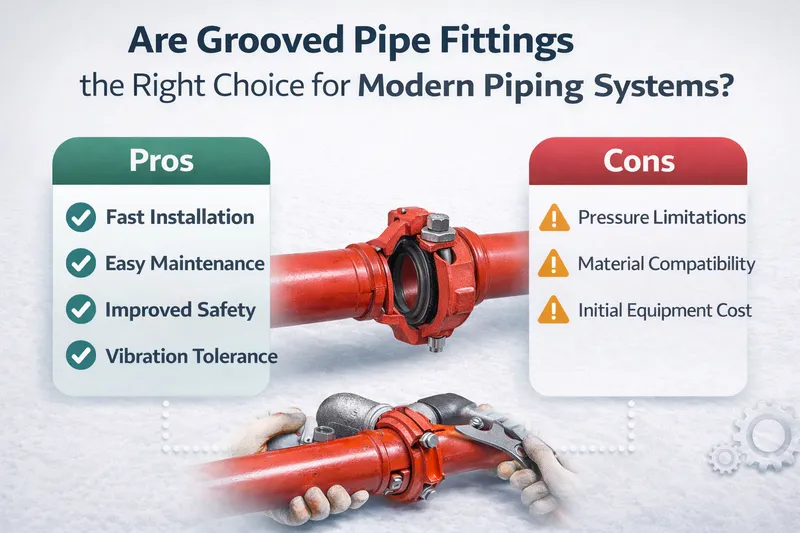
Key Advantages of Grooved Pipe Fittings
Faster Installation and Reduced Labor Costs
One of the biggest advantages of groove fittings is the speed of installation. Unlike welding, which requires skilled labor and special equipment, grooved systems can be assembled using standard tools. This reduces installation time significantly, especially in large projects such as factories, data centers, and commercial buildings.
For instance, a contractor installing a fire protection system in a warehouse may complete pipeline connections much faster with grooved couplings than with welded joints. The reduction in labor hours can lead to significant cost savings for large infrastructure projects.
Easy Maintenance and System Expansion
Another major benefit of grooved pipe fittings is their flexibility in maintenance and modification. Because the couplings can be easily removed and reinstalled, maintenance teams can quickly access sections of the piping system without cutting or welding pipes.
In facilities such as hospitals, airports, and industrial plants, this feature allows maintenance teams to repair or replace components with minimal system downtime.
Improved Safety During Installation
Grooved connections eliminate the need for hot work such as welding or cutting, reducing fire hazards and improving workplace safety. This is particularly important in environments where flammable materials or sensitive equipment are present.
For example, installing pipelines in a chemical plant or fuel storage facility often requires strict safety regulations. Using groove fittings can significantly reduce installation risks compared with traditional welding methods.
Vibration and Thermal Movement Tolerance
Grooved couplings can absorb slight pipeline movement caused by vibration, temperature changes, or ground settlement. This flexibility makes them suitable for HVAC systems, industrial facilities, and earthquake-prone regions.
Unlike rigid welded joints, grooved connections allow a small amount of movement while maintaining sealing integrity, which helps extend the lifespan of the entire piping system.
Potential Limitations of Grooved Pipe Fittings
While grooved systems offer many benefits, they are not suitable for every application. Engineers must evaluate several factors before selecting this connection method.
Pressure and Temperature Limitations
Some high-pressure or extremely high-temperature applications may require welded or flanged connections instead of grooved fittings. Although modern grooved systems can handle substantial pressure levels, certain industrial processes exceed their design limits.
For example, pipelines in oil refineries or high-pressure steam systems often require more rigid connection methods.
Compatibility with Specific Pipe Materials
Grooved systems are commonly used with steel pipes, but compatibility with other materials such as plastic or stainless steel may require specialized components. Engineers should verify material compatibility during system design to avoid long-term performance issues.
Initial Equipment Requirement
Creating grooves on pipe ends requires specialized grooving machines. While these machines are widely available, contractors working on smaller projects may need to invest in additional equipment.
Despite this initial requirement, the long-term efficiency benefits often outweigh the equipment cost in large projects.
Comparison of Grooved Pipe Fittings and Traditional Connection Methods
The following table highlights the key differences between grooved connections and other common pipe joining methods.
Table caption: Comparison of common pipe connection methods used in industrial piping systems
| Connection Method | Installation Speed | Maintenance | Safety | Flexibility | Typical Applications |
|---|---|---|---|---|---|
| Grooved Pipe Fittings | Very fast | Easy | High | Flexible | Fire protection, HVAC |
| Welded Joints | Slow | Difficult | Lower (hot work) | Rigid | Oil & gas pipelines |
| Flanged Connections | Moderate | Moderate | Medium | Rigid | Industrial equipment |
| Threaded Connections | Moderate | Moderate | Medium | Limited | Small diameter piping |
As shown in the table, groove fittings offer a balanced combination of speed, safety, and flexibility, making them an attractive choice for modern building infrastructure and mechanical systems.
Typical Applications of Grooved Pipe Fittings
Grooved piping technology has been adopted in many industries due to its reliability and installation efficiency.
Fire Protection Systems
Fire sprinkler systems are one of the most common applications for grooved pipe fittings. Large commercial buildings often require extensive fire protection networks, and grooved connections allow contractors to install and maintain these systems efficiently.
HVAC and Mechanical Systems
Heating, ventilation, and air-conditioning pipelines frequently use grooved connections because they can accommodate vibration and thermal expansion.
Industrial Facilities
Manufacturing plants, power stations, and processing facilities use grooved piping systems to reduce installation time and simplify maintenance operations.
Engineers can explore a wide range of groove fittings designed for different piping configurations and system requirements.
Contact our engineering team to discuss your project requirements and find the most suitable piping solution.
How to Choose the Right Grooved Pipe Fittings for Your Project
Selecting the correct fittings involves evaluating several key factors.
Pipeline Pressure and Flow Requirements
Different coupling designs are rated for different pressure levels. Engineers should verify pressure ratings before selecting fittings for the system.
Environmental Conditions
Pipelines exposed to moisture, chemicals, or outdoor environments may require corrosion-resistant materials or coatings.
Compliance with International Standards
Projects often require compliance with standards such as UL, FM, or ASTM. Working with certified manufacturers ensures that the fittings meet these regulatory requirements.
Long-Term Maintenance Considerations
Ease of maintenance is a critical factor in large facilities. Grooved systems allow maintenance teams to quickly replace or modify pipeline sections when necessary.
Frequently Asked Questions
Are grooved pipe fittings reliable for fire protection systems?
Yes. Grooved piping systems are widely used in fire sprinkler installations because they provide reliable sealing and allow quick installation in large buildings.
Do grooved pipe fittings require special tools?
Installation typically requires standard tools such as wrenches and a grooving machine for preparing pipe ends.
Can grooved pipe fittings handle high pressure?
Modern grooved systems can handle substantial pressure levels, but extremely high-pressure applications may still require welded or flanged joints.
Are grooved pipe fittings suitable for industrial facilities?
Yes. Many industrial plants use grooved piping systems because they simplify installation and maintenance while maintaining strong performance.
About Jianzhi
Jianzhi is a trusted manufacturer specializing in high-quality piping connection solutions for global infrastructure and industrial projects. With decades of manufacturing experience and advanced production technology, Jianzhi provides reliable grooved pipe fittings, malleable iron fittings, and piping components that meet international standards. Our products are widely used in fire protection systems, mechanical piping networks, and construction projects around the world. By combining strict quality control with continuous innovation, Jianzhi supports engineers, contractors, and distributors with durable and efficient piping solutions.