

Understanding the Concept of a 90 Degree Elbow Center
In piping systems, a 90 degree elbow is one of the most commonly used fittings to change flow direction. The elbow center, often called the center-to-face or centerline radius reference, plays a critical role in layout, fabrication, and installation accuracy. Without a clear understanding of elbow center calculation, pipe runs may misalign, causing stress, leakage, or costly rework.
The elbow center refers to the imaginary point from which the curved elbow radius is measured. For a 90 degree elbow, this center defines how far the fitting extends in both horizontal and vertical directions. Accurate calculation ensures the elbow fits precisely between straight pipe sections while maintaining the intended flow path.
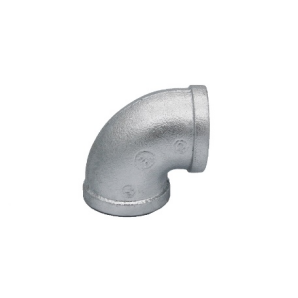
Why Elbow Center Calculation Matters in Piping Design
Elbow center calculation is essential for pipe spool fabrication, isometric drawings, and on-site installation. Engineers and fabricators rely on correct center dimensions to calculate pipe cut lengths and ensure proper alignment with flanges, valves, and other fittings.
In industrial projects such as fire protection systems, oil and gas pipelines, and HVAC installations, even small deviations in elbow center measurement can lead to cumulative errors. This is why many professionals prefer standardized fittings supplied by experienced manufacturers such as china pipe fittings suppliers that follow international dimensional standards.
Basic Principle Behind the Elbow Center Calculation Formula
The elbow center calculation formula is based on the radius of curvature of the elbow. For most standard 90 degree elbows, the center distance is equal to the elbow’s centerline radius. This radius varies depending on whether the elbow is long radius or short radius.
A long radius 90 degree elbow typically has a centerline radius equal to 1.5 times the nominal pipe diameter. A short radius elbow usually has a centerline radius equal to the nominal pipe diameter. This radius defines the distance from the elbow center to each end of the fitting.
The fundamental logic behind the formula is geometric. A 90 degree elbow represents a quarter of a circle, and the center distance corresponds to the radius of that circle.
Elbow Center Calculation Formula Explained Clearly
The most commonly used elbow center calculation formula for a 90 degree elbow can be expressed in a simplified form:
Elbow center distance equals centerline radius
For long radius elbows, the centerline radius equals 1.5 multiplied by the nominal pipe size. For short radius elbows, the centerline radius equals the nominal pipe size.
This means that once the pipe size and elbow type are known, the center dimension can be calculated instantly. For more detailed explanations, examples, and dimensional tables, refer to the professional guide on elbow center calculation formula, which is widely used by piping engineers and fabricators.
Difference Between Long Radius and Short Radius Elbows
Understanding elbow type is crucial before applying any calculation formula. Long radius elbows offer smoother flow and lower pressure loss, making them ideal for high-flow or high-pressure systems. Their larger centerline radius results in a longer center dimension.
Short radius elbows are compact and suitable for tight spaces. However, their smaller radius increases flow resistance. Because the elbow center differs significantly between these two types, using the wrong formula can lead to incorrect pipe cutting lengths and installation issues.
Selecting the correct elbow from reliable manufacturers ensures dimensional consistency and compliance with standards such as ASME and ANSI.
Practical Application in Pipe Layout and Fabrication
In real-world piping projects, elbow center calculation is used during pipe spool drawings and CNC pipe cutting. Fabricators subtract elbow center distances from total run lengths to determine exact straight pipe dimensions.
For installers, knowing the elbow center helps position supports and anchors accurately. This reduces stress concentrations at joints and improves long-term system reliability. High-quality fittings sourced from professional suppliers like jianzhi pipe fittings help maintain predictable dimensions across large projects.
Common Mistakes in Elbow Center Calculation
One common mistake is assuming all 90 degree elbows share the same center dimension. In reality, standards, manufacturers, and elbow types can affect the exact measurement. Another frequent error is confusing outside diameter with nominal pipe size when applying the formula.
Ignoring manufacturing tolerances and standards can also cause misalignment during installation. Always verify elbow dimensions using manufacturer data sheets or trusted technical references before finalizing calculations.
Standards and Specifications Affecting Elbow Centers
International standards such as ASME B16.9 define dimensional tolerances for butt-weld elbows, including center-to-end dimensions. These standards ensure interchangeability and consistency across different suppliers.
When sourcing elbows for industrial use, choosing manufacturers that strictly follow these standards is essential. This not only simplifies elbow center calculation but also improves overall system safety and performance.
Choosing the Right Pipe Fitting Supplier
Accurate elbow center calculation depends on consistent and standardized fittings. Experienced manufacturers provide precise dimensional data, material certifications, and technical support. Working with a trusted china pipe fittings supplier allows engineers and contractors to confidently apply calculation formulas without worrying about unexpected dimensional variations.
Reliable suppliers also offer a wide range of elbow types, sizes, and materials, making them suitable for fire protection, petrochemical, and construction piping systems.
Conclusion
Understanding how to calculate the center of a 90 degree elbow is a fundamental skill in piping design and installation. By applying the correct elbow center calculation formula and selecting the appropriate elbow type, engineers and installers can achieve accurate layouts and efficient installations.
Combining proper calculation methods with standardized fittings from trusted manufacturers ensures precision, safety, and long-term reliability in any piping system.