

Abstract
Connecting galvanized steel pipes without the use of traditional threading presents a common yet significant challenge in both residential and industrial plumbing. This document provides a comprehensive examination of three primary threadless connection methods applicable to galvanized pipe systems as of 2026: press fittings, grooved couplings, and compression fittings. It explores the underlying mechanical principles, detailed installation procedures, requisite tooling, and specific application scenarios for each technique. The analysis extends to a comparative evaluation of these methods based on criteria such as pressure ratings, cost-effectiveness, installation speed, and required skill level. Furthermore, the document addresses critical safety protocols, including the prevention of galvanic corrosion, a phenomenon of particular concern when integrating new components into existing galvanized systems. The objective is to equip professionals and knowledgeable DIY enthusiasts with the theoretical understanding and practical guidance necessary to select and execute the most appropriate threadless connection strategy for their specific project, ensuring a durable, leak-free, and code-compliant result.
Key Takeaways
- Press fittings offer a fast, flame-free, and reliable connection for small to medium pipes.
- Grooved couplings are the robust, flexible standard for larger diameter industrial applications.
- Compression fittings provide an accessible solution for small, low-pressure repairs.
- Properly learn how to connect galvanized pipe without threads to avoid leaks and corrosion.
- Always select the fitting method based on pipe size, pressure, and application environment.
- Preventing galvanic corrosion with dielectric unions is vital when joining dissimilar metals.
- Pressure testing is a non-negotiable step to verify the integrity of any new connection.
Table of Contents
- Understanding Galvanized Pipe and the Threadless Challenge
- Method 1: Press Fittings – The Modern, Flame-Free Solution
- Method 2: Grooved Couplings – The Robust Choice for Larger Diameters
- Method 3: Compression Fittings – The Accessible Repair-Oriented Option
- Comparative Analysis of Threadless Connection Methods
- Critical Safety Protocols and Long-Term System Health
- Troubleshooting Common Issues in Threadless Galvanized Connections
- Frequently Asked Questions (FAQ)
- Conclusion
- References
Understanding Galvanized Pipe and the Threadless Challenge
Before we can begin to explore the solutions, we must first cultivate a deep understanding of the material itself and the nature of the problem it presents. Galvanized pipe is not merely a tube of steel; it is a product of a specific moment in industrial history, carrying with it a legacy of both durability and inherent complication. To work with it effectively, especially in situations where traditional methods are unavailable, is to engage in a dialogue with the past, applying modern ingenuity to a material conceived in a different era.
What is Galvanized Pipe? A Look at its History and Properties
Imagine a plain steel pipe, strong yet vulnerable. Left to its own devices, particularly in the presence of water and oxygen, this pipe will inevitably succumb to oxidation—what we commonly call rust. Rust not only corrodes the pipe, weakening its structure, but it also contaminates the water flowing through it, turning it a displeasing reddish-brown and imparting a metallic taste. In the late 19th and early 20th centuries, as indoor plumbing became a hallmark of modern civilization, this was a significant problem.
The solution was galvanization. The process, typically hot-dip galvanization, involves immersing the steel pipe in a bath of molten zinc. The zinc metallurgically bonds to the steel, forming a protective coating of zinc-iron alloy layers with a final layer of pure zinc on the exterior. Why zinc? Zinc is more electrochemically active than iron. When the two are in contact in the presence of an electrolyte (like water), the zinc acts as a “sacrificial anode.” It corrodes preferentially, protecting the steel beneath it from rusting. This sacrificial protection is the genius of galvanization.
For decades, from the early 1900s through the 1960s and beyond, galvanized steel was the standard for residential water supply lines in North America and Europe. It was strong, rigid, and far more durable than the lead pipes it often replaced. However, it was not without its flaws. Over many years, the protective zinc layer can wear away, especially in areas with very hard or very soft water. Once the steel is exposed, corrosion begins, leading to restricted flow and eventual leaks. Minerals in the water can also build up inside the rough interior, a process called scaling, which further chokes off water pressure. It is this aging infrastructure that so often confronts today’s plumbers and homeowners.
The Inherent Difficulties of Modifying Existing Galvanized Systems
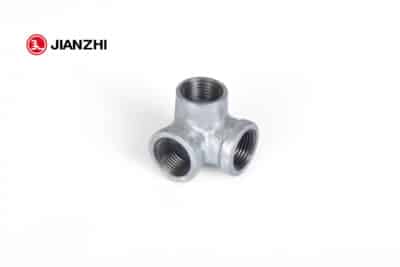
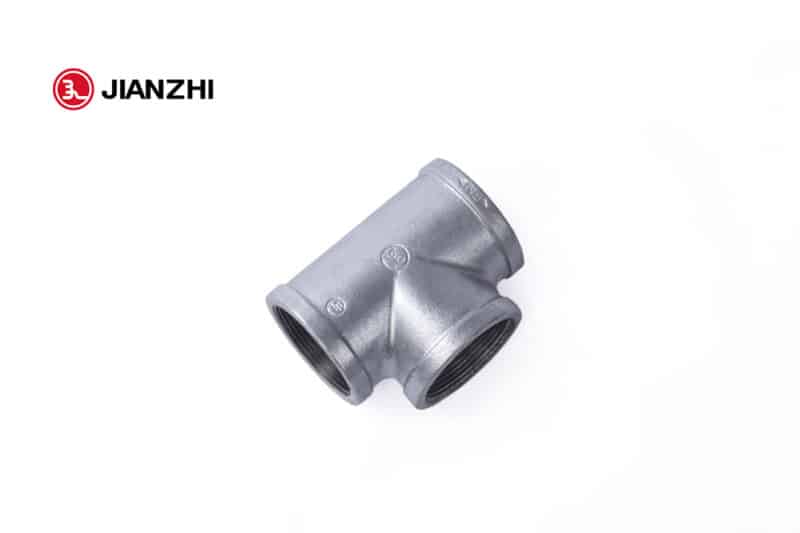
When you encounter a galvanized pipe in a wall or crawlspace, you are looking at a piece of history. It has been serving its function for potentially half a century or more. This age brings with it a certain fragility. The primary method for joining these pipes historically was the use of threaded fittings. A worker would use a heavy, specialized tool called a pipe threader to cut tapered grooves into the end of the pipe. A corresponding female-threaded fitting, often a malleable cast iron pipe fitting, would then be screwed on, with pipe dope or tape used to seal the joint.
Attempting to apply this same method to an old, existing pipe is fraught with peril. The process of cutting new threads removes material from the pipe wall. On a new pipe, this is accounted for in the design. On a 60-year-old pipe that may have already lost some of its wall thickness to internal or external corrosion, cutting new threads can fatally weaken it. The torque and clamping force required by a pipe threader can be enough to split or crush the aged, brittle pipe.
Furthermore, there is the issue of access. Threading tools are bulky and require a significant amount of clearance around the pipe to operate. Such clearance is a luxury rarely afforded in the tight confines of a wall cavity, a cramped basement ceiling, or a narrow utility chase. The challenge, then, becomes clear: how does one cut into and make a reliable connection to this legacy piping system without the ability, or the wisdom, of using threads? This is the central question that the following methods seek to answer.
Why Threading Isn’t Always the Answer: Safety, Cost, and Practicality
Beyond the physical risks to the pipe itself, there are other compelling reasons to seek alternatives to threading. From a safety perspective, some very old galvanized pipes (pre-1960s) were known to contain impurities, including lead, within the zinc coating. While generally stable, the process of cutting, threading, or heating this pipe can potentially release particles into the air or water supply, a risk best avoided.
From a practical and economic standpoint, the tools required for threading are a significant investment for a DIYer and even for some professional plumbers who may not work with steel pipe frequently enough to justify the cost. A manual pipe threader set can cost hundreds of dollars, while a powered threading machine can run into the thousands. Renting is an option, but it adds logistical complexity and cost to what might be a simple repair.
Therefore, the search for how to connect galvanized pipe without threads is not merely an academic exercise. It is a practical necessity driven by the realities of aging infrastructure, workplace safety, constrained spaces, and economic efficiency. The methods that follow—press fittings, grooved couplings, and compression fittings—represent three distinct and powerful answers to this pressing challenge.
Method 1: Press Fittings – The Modern, Flame-Free Solution
Imagine a method of joining pipe that requires no flame, no solder, no threading, and no glue, yet creates a permanent, watertight seal in seconds. This is the promise of press fitting technology. Born in Europe in the late 1980s and gaining widespread adoption in North America since the early 2000s, the press system has revolutionized pipe joining. Initially popular for copper and stainless steel, manufacturers have developed specific press fittings designed for use with carbon steel and galvanized pipe, offering a truly modern solution to our old-pipe problem.
The Anatomy of a Press Fitting: How It Creates a Watertight Seal
At its heart, a press fitting is a marvel of materials science and mechanical engineering. Let’s dissect one to understand how it works. A typical press fitting for galvanized pipe consists of three key components:
- The Fitting Body: This is the main structure of the fitting (e.g., an elbow, tee, or coupling), usually made of high-quality carbon steel and then galvanized to match the pipe and provide corrosion resistance.
- The Sealing Element: Nestled inside a specially engineered groove within the fitting’s socket is a high-performance O-ring. For galvanized pipe systems used for water, this is typically made from EPDM (ethylene propylene diene monomer), a synthetic rubber known for its outstanding resistance to heat, cold, water, and ozone. This O-ring is the primary seal.
- The Press Indicator: Many modern press fittings include a feature, often a plastic ring or film, that detaches or changes appearance only after a successful press has been made. This provides a simple visual confirmation that the joint has been properly secured.
The magic happens during the pressing process. A specialized, battery-powered or corded press tool is fitted with a jaw or ring set appropriately sized for the fitting. This jaw is placed over the socket of the fitting. When the tool is activated, it applies thousands of pounds of controlled, concentric force, deforming the fitting body in a precise, hexagonal pattern. This action accomplishes two things simultaneously: it mechanically locks the fitting onto the pipe, creating a joint with incredible pull-out strength, and it compresses the EPDM O-ring against the pipe’s outer surface, forming a bubble-tight, permanent seal. It’s a hydraulic handshake that is both immensely strong and perfectly sealed.
Step-by-Step Guide to Installing Press Fittings on Galvanized Pipe
The elegance of the press system lies in its speed and simplicity, but precision is paramount. Following the correct procedure is not optional; it is the only way to guarantee a lasting, leak-free connection.
- Cut the Pipe: The first step is to cut the existing galvanized pipe to the required length. This cut must be perfectly square. A wheel-type pipe cutter designed for steel is the ideal tool. An abrasive chop saw can also be used, but it creates more heat and burrs. A reciprocating saw with a metal-cutting blade can work in a pinch, but achieving a square cut is very difficult and should be a last resort.
- Deburr and Clean: This is a step that cannot be skipped. After cutting, both the inside and outside of the pipe will have a sharp burr. Use a deburring tool or a half-round file to remove these burrs completely. Any remaining burr on the outside of the pipe can damage the O-ring during insertion, compromising the seal. After deburring, wipe the end of the pipe clean with a rag to remove any metal filings, dirt, or oil. The surface where the O-ring will sit must be pristine.
- Inspect the Fitting: Before proceeding, look inside the press fitting. Ensure the EPDM O-ring is present, properly seated in its groove, and free of any debris or damage.
- Mark the Insertion Depth: This is another critical step. Slide the press fitting onto the end of the pipe until it bottoms out against the internal pipe stop. Using a permanent marker or a specialized depth gauge provided by the fitting manufacturer, draw a line on the pipe right at the edge of the fitting. Now, remove the fitting. This line is your witness mark. It ensures you have the correct insertion depth and allows you to verify that the pipe has not backed out of the fitting during the pressing process.
- Assemble and Verify: Re-insert the pipe into the fitting until the edge of the fitting aligns perfectly with your witness mark. A small twist as you push can help ease the pipe past the O-ring.
- Press the Connection: Open the jaws of the press tool and place them squarely over the contoured bead of the fitting. Ensure the jaws are perpendicular to the pipe. Depress the trigger of the tool. The tool will cycle through its press sequence, applying immense force before automatically releasing. The entire process takes about 3-7 seconds.
- Inspect the Joint: Once the tool is removed, inspect the connection. The fitting should show a distinct hexagonal press pattern. Check your witness mark; it should still be visible right at the edge of the fitting, confirming the pipe did not slip. If the fitting has a press indicator, ensure it has been activated.
You have now successfully made a permanent, engineered connection.
Tools of the Trade: What You Need for a Professional Press Connection
While the process is simpler than threading, it does require a specific set of tools.
| Tool | Description | Why It’s Necessary |
|---|---|---|
| Press Tool | A battery-powered or corded electro-hydraulic tool. The heart of the system. | Provides the thousands of pounds of controlled force required to deform the fitting and compress the seal. It’s not optional. |
| Press Jaws/Rings | Interchangeable jaws or rings that match the specific size and brand of the fittings being used. | Ensures the force is applied in the correct pattern and location on the fitting. Jaws from different manufacturers are not compatible. |
| Steel Pipe Cutter | A wheel-type cutter designed for cutting steel pipe. | Creates a clean, square cut with minimal burring, which is essential for a proper seal. |
| Deburring Tool | A tool with hardened steel blades for removing burrs from the inside and outside of the pipe. | Prevents damage to the O-ring during assembly, which is the most common cause of press fitting failure. |
| Depth Gauge/Marker | A specialized gauge or a simple permanent marker. | Used to mark the correct insertion depth on the pipe, ensuring full engagement and allowing for visual inspection. |
Advantages and Disadvantages of the Press Fitting System
No single method is perfect for every situation. A dispassionate evaluation of the pros and cons is necessary for an informed decision.
Advantages:
- Speed: A press connection can be made in a fraction of the time it takes to thread a pipe, dramatically reducing labor costs.
- Safety: The process is flame-free, eliminating fire risk and the need for a hot work permit. This is a massive advantage in occupied buildings or repair situations.
- Reliability: When performed correctly, the engineered connection is permanent and highly reliable, with pressure ratings often exceeding those of the pipe itself.
- Cleanliness: No cutting oils, pipe dope, or solder flux are required, making for a cleaner job site.
Disadvantages:
- Tool Cost: The initial investment in a press tool and jaws is substantial, often running into the thousands of dollars. This is the primary barrier for DIYers and occasional users.
- Fitting Cost: Individual press fittings are significantly more expensive than their traditional threaded malleable iron counterparts.
- Lack of Adjustability: Once a fitting is pressed, it is permanent. If a mistake is made in alignment or measurement, the only recourse is to cut the fitting out and start over.
- Bulky Tools: While more compact than threading machines, press tools can still be bulky and may not fit into the absolute tightest of spaces.
Common Applications and Scenarios for Press Fittings
Press fittings for galvanized pipe excel in repair and renovation scenarios. Imagine a pinhole leak in a galvanized water line in a ceiling. The traditional repair would involve shutting down the water, draining a large section of the system, cutting out a section of pipe (hoping it doesn’t crumble), threading both ends in a tight, wet space, and then using a union to join a new piece.
With press fittings, the process is transformed. Shut off the water, make two quick cuts to remove the damaged section, slip on two press couplings and a new piece of pipe, press both ends, and the repair is complete in minutes. They are ideal for connecting to existing systems, tying in new branches, and for any application where speed and the absence of flame are paramount. They are commonly approved for potable water, hydronic heating, compressed air, and various other industrial fluid applications, though they are generally not approved for natural gas or fuel oil lines.
Method 2: Grooved Couplings – The Robust Choice for Larger Diameters
As we move from the residential and light commercial scale to the world of industrial piping, fire sprinkler systems, and large-scale mechanical rooms, the dimensions of the pipes change, and so too must our connection methods. While press fittings work well up to 4 inches in diameter, the grooved coupling system comes into its own on pipes from 2 inches up to 24 inches and beyond. This method is the undisputed champion for joining large-diameter galvanized pipe without resorting to welding or flanging.
Deconstructing the Grooved Coupling System: Gasket, Housing, and Bolts
The grooved system is brilliantly simple yet incredibly effective. It is a mechanical joint that consists of three primary elements working in concert:
- The Groove: This is the foundation of the entire system. A shallow, circumferential groove is cold-formed into the end of each pipe. This is not a cutting process; it is a rolling process that displaces the metal without removing it, maintaining the pipe’s wall thickness and integrity.
- The Gasket: A synthetic rubber gasket, shaped to fit over the two pipe ends, creates the seal. The gasket material is chosen based on the service fluid. For water applications, EPDM is the standard, just as with press fittings. For petroleum products, Nitrile (NBR) is used, and for high-temperature or chemical applications, Silicone (VMQ) may be required. The gasket’s C-shaped profile is designed to use the internal pressure of the system to enhance the seal—the higher the pressure, the tighter the gasket seals against the pipe.
- The Coupling Housing: This is a two-piece (or sometimes single-piece for smaller sizes) housing made of ductile iron or other strong materials. The inside of the housing has keys that are precisely shaped to engage with the grooves in the pipes.
- The Bolts and Nuts: A pair of bolts and nuts (one for each side of the housing) are used to draw the two housing segments together. As the bolts are tightened, the keys of the housing engage the pipe grooves, locking the pipes together and securing the gasket in place.
The assembled joint is strong, secure, and has a unique property: it can be either rigid or flexible, depending on the specific coupling and gasket chosen. A standard flexible coupling allows for controlled linear movement, angular deflection, and rotation to accommodate thermal expansion and contraction, seismic movement, and vibration. This is a significant advantage over fully rigid systems like welded or threaded connections.
Preparing the Pipe: The Roll Grooving Process Explained
The creation of the groove is the most critical preparatory step. A specialized roll grooving machine is required. Unlike a pipe threader that cuts material away, a roll groover is a cold-forming process.
The machine has two main components: a powered top roller and a passive bottom roller. The pipe is placed on the bottom roller, and the operator uses a hydraulic pump to lower the top roller, which has a profile that matches the desired groove shape, onto the pipe. The machine then rotates the pipe. With each rotation, the operator slowly increases the pressure on the top roller. This process gradually and precisely impresses a groove into the pipe exterior by displacing the metal. It does not remove any material.
This is a key distinction. Because no metal is removed, the full integrity and pressure-bearing capability of the pipe wall is maintained. The process is clean, fast, and can be performed on-site or in a fabrication shop. For galvanized pipe, roll grooving is the preferred method as it does not damage the zinc coating in the same way a cutting process would.
Step-by-Step Assembly of a Grooved Coupling Connection
Once the pipes are grooved, assembling the joint is remarkably fast and straightforward.
- Gasket Lubrication: Apply a thin, even coat of a compatible lubricant (provided by the coupling manufacturer) to the sealing lips of the gasket. This is crucial for allowing the gasket to slide over the pipe ends without pinching or tearing.
- Install the Gasket: Place the gasket over the end of one pipe, ensuring it does not extend beyond the groove.
- Align the Pipes: Bring the second grooved pipe into alignment with the first. Roll the gasket over, centering it between the grooves of the two pipes. The gasket should be seated evenly and smoothly.
- Assemble the Housing: Place the two halves of the coupling housing over the gasket. The keys on the inside of the housing must engage the grooves in each pipe.
- Install Bolts and Nuts: Insert a bolt into each side of the housing and hand-tighten the nuts. Ensure the oval neck of each bolt seats correctly in the bolt hole of the housing.
- Tighten to Spec: Using a socket wrench or impact wrench, tighten the nuts alternately and evenly until the bolt pads on the housing meet metal-to-metal. There is no specific torque value to achieve; the visual confirmation of metal-to-metal contact is the indicator of a properly installed coupling. This design prevents over-tightening and ensures consistent pressure on the gasket.
The joint is now complete and immediately ready for pressure testing. The entire process, for example on a 6-inch pipe, can take as little as five minutes, compared to hours for a comparable welded or flanged joint.
When to Choose Grooved Couplings: Ideal Use Cases
Grooved couplings are the go-to solution for how to connect galvanized pipe without threads in a wide range of commercial and industrial settings. Their primary applications include:
- Fire Sprinkler Systems: This is the most common application. The speed of installation and the system’s ability to handle seismic movement make it the industry standard.
- HVAC Systems: Used for large-diameter chilled water, condenser water, and hot water lines. The vibration-dampening qualities are a major benefit.
- Industrial Process Piping: Used for compressed air, various chemical lines (with appropriate gaskets), and other utility piping.
- Water and Wastewater Treatment: The corrosion resistance of galvanized pipe combined with the ease of maintenance of grooved couplings makes it a strong choice.
- Mining and Tunneling: Used for dewatering lines and compressed air, where systems may need to be assembled and disassembled frequently.
Essentially, any time you are working with galvanized pipe of 2 inches or larger and need a reliable, fast, and maintainable connection, the grooved system should be your primary consideration. A vast selection of threadless connection methods and components are available from specialized manufacturers.
Method 3: Compression Fittings – The Accessible Repair-Oriented Option
We have explored the high-tech solution of press fittings and the heavy-duty option of grooved couplings. Now, we turn our attention to the most accessible, and perhaps most familiar, of the threadless methods: the compression fitting. For small-diameter repairs, tapping into an existing line for a single fixture, or in situations where specialized power tools are simply not available, the humble compression fitting offers an effective and reliable way to connect galvanized pipe without threads.
How Compression Fittings Work: The Role of the Ferrule and Nut
The genius of the compression fitting lies in its mechanical simplicity. It requires no special tools beyond a pair of wrenches. A standard compression fitting for metal pipe consists of three parts:
- The Fitting Body: This is the main component (a coupling, adapter, or valve) with a tapered seat machined into its opening.
- The Compression Nut: A nut with internal threads that match the external threads on the fitting body.
- The Ferrule (or Olive): This is the heart of the fitting. It is a small ring of soft metal, typically brass. It is shaped like a barrel or a ring with beveled edges.
The connection is made through a process of pure mechanical force. The nut and ferrule are slipped over the end of the plain, unthreaded pipe. The pipe is then inserted into the fitting body until it bottoms out against the internal shoulder. The nut is then tightened onto the fitting body. As the nut is tightened, its internal ramp forces the soft metal ferrule forward into the tapered seat of the fitting body. This action compresses the ferrule, causing it to deform and bite into the outer surface of the pipe while also pressing tightly against the tapered seat of the fitting. This creates a strong, metal-to-metal seal that is both mechanically secure and watertight.
A Detailed Walkthrough: Connecting Galvanized Pipe with Compression Fittings
Success with compression fittings hinges on careful preparation and a gentle touch during tightening.
- Cut and Prepare the Pipe: As with all other methods, the pipe must be cut perfectly square. A wheel-type pipe cutter is strongly recommended. After cutting, the pipe end must be thoroughly deburred and cleaned. The outer surface must be smooth, round, and free of any deep scratches, paint, or corrosion that could interfere with the ferrule’s ability to create a seal.
- Assemble the Components: Slide the compression nut onto the pipe, ensuring the threads face the end of the pipe. Then, slide the ferrule onto the pipe. The ferrule should be able to move freely.
- Insert the Pipe: Push the pipe into the fitting body. You must ensure the pipe goes all the way in until it hits the internal stop. Failure to do so is a common cause of leaks and blowouts.
- Hand-Tighten the Nut: Slide the nut and ferrule forward and hand-tighten the nut onto the fitting body. This should be done until it is snug.
- Tighten with Wrenches: Here is where finesse is required. Use one wrench to hold the fitting body steady (a “backup wrench”) and a second wrench to tighten the compression nut. The standard rule for brass compression fittings is to tighten one full turn (360 degrees) past hand-tight. For some stainless steel or other heavy-duty fittings, it may be one and a quarter turns. It is imperative to follow the manufacturer’s specific instructions. The goal is to tighten just enough to compress the ferrule and create a seal. Over-tightening is a common and critical error.
Limitations and Best Practices for Using Compression Fittings
While incredibly useful, it is vital to understand the limitations of compression fittings, especially in the context of a whole-building plumbing system.
- Pressure and Temperature Ratings: Standard brass compression fittings have lower pressure and temperature ratings compared to press or grooved systems. They are generally suitable for standard residential water pressure but may not be appropriate for high-pressure industrial applications or lines with significant water hammer.
- Vibration: They are more susceptible to loosening under conditions of heavy vibration than press or grooved fittings. They should not be used where significant mechanical vibration is expected.
- Concealment: Many local plumbing codes prohibit the use of compression fittings in concealed locations, such as inside a wall or ceiling. The logic is that these fittings are considered serviceable mechanical joints, and if they were to leak, they must be accessible for repair. Always check with your local building authority.
- Do Not Over-tighten: This cannot be emphasized enough. Over-tightening the nut can deform the pipe, crack the fitting body, or damage the ferrule, leading to a leak. It can also make the fitting impossible to disassemble in the future. The feeling is one of “drawing up” the nut, not cranking it down with all your might.
- Single Use: The ferrule is a one-time-use component. Once it has been compressed onto a pipe, it has been permanently deformed. If you need to disassemble the joint, you must use a new ferrule when you reassemble it.
Repair Scenarios: Where Compression Fittings Shine
Despite their limitations, compression fittings are an invaluable tool for specific problems. They are perfect for:
- Small-Diameter Repairs: For repairing a pinhole leak or a small damaged section on a 1/2-inch or 3/4-inch galvanized line where access is good.
- Fixture Connections: Ideal for connecting a new faucet, toilet supply line, or ice maker to an existing galvanized stub-out.
- Transitions: Compression fittings are available that can transition between different pipe materials, such as from galvanized steel to copper or PEX (provided a dielectric union is used for copper to prevent corrosion).
- Low-Tech Solutions: In a remote location or a situation where power tools are not an option, compression fittings can be a lifesaver.
Think of compression fittings as the precision tools in your plumbing toolbox. They may not be for building the entire house, but for those specific, small-scale surgical repairs, they are often the simplest and most effective answer.
Comparative Analysis of Threadless Connection Methods
Choosing the right method for how to connect galvanized pipe without threads requires a thoughtful consideration of the project’s specific demands. The following table provides a comparative framework to aid in this decision-making process, evaluating each method across several key performance indicators.
| Feature | Press Fittings | Grooved Couplings | Compression Fittings |
|---|---|---|---|
| Typical Pipe Size | 1/2″ to 4″ | 2″ to 24″+ | 1/8″ to 2″ |
| Installation Speed | Very Fast (seconds per joint) | Fast (minutes per joint) | Moderate (requires careful tightening) |
| Required Tools | Expensive proprietary press tool | Moderate cost roll groover | Basic hand wrenches |
| Skill Level | Moderate (training recommended) | Moderate (training recommended) | Low (care must be taken not to over-tighten) |
| Pressure Rating | High (often up to 500+ PSI) | Very High (up to 1000+ PSI) | Lower (typically 150-400 PSI) |
| Vibration Resistance | Good | Excellent (flexible versions) | Fair (can loosen over time) |
| Cost per Fitting | High | Moderate | Low |
| Use in Concealed Spaces | Generally Permitted | Generally Permitted | Often Prohibited by Code |
| Best Use Case | Fast, flame-free repairs/renovations | Large industrial/fire protection systems | Small, accessible low-pressure repairs |
Critical Safety Protocols and Long-Term System Health
Working on any plumbing system, particularly an older one, carries inherent risks. Adhering to rigorous safety protocols is not a matter of convenience but a professional obligation and a dictate of self-preservation. Moreover, the choices made during the connection process have long-lasting implications for the health and longevity of the entire piping system.
Personal Protective Equipment (PPE) for Working with Galvanized Pipe
The minimum level of protection should always be observed, regardless of how minor the task may seem.
- Eye Protection: Safety glasses or goggles are non-negotiable. Cutting steel pipe can send small, sharp fragments flying. Old pipes can release flakes of rust and scale under pressure.
- Hand Protection: Heavy-duty work gloves are essential for handling old pipes, which can have sharp edges from corrosion or previous work. They also protect from the clamping force of wrenches and other tools.
- Respiratory Protection: When cutting galvanized pipe, especially with an abrasive saw, a respirator rated for metal fumes (like an N95 or better) is advisable to avoid inhaling zinc oxide fumes or other potential contaminants from the old coating.
Pressure Testing Your New Connections: A Non-Negotiable Step
Once a new connection is made, it is not complete until it is tested. Hope is not a strategy. The only way to be certain a joint is secure and leak-free is to subject it to a pressure test. For water lines, this typically involves sealing the section of pipe that has been worked on, filling it with water, and using a small hand pump to raise the pressure to a level specified by local code (often 1.5 times the system’s working pressure, e.g., 125 PSI for a typical residential system). This pressure should be held for a specified duration (e.g., 15-30 minutes) with no discernible drop in pressure on the gauge and no visible weeping from the new joints. Skipping this step is gambling with a future flood.
Understanding Galvanic Corrosion and How to Prevent It
This is perhaps the most critical concept for ensuring the long-term health of a repaired galvanized system. Galvanic corrosion is an electrochemical process that occurs when two dissimilar metals are in contact in the presence of an electrolyte (water). The more active metal (anode) corrodes at an accelerated rate, while the less active metal (cathode) is protected.
The galvanic series tells us the relative activity of different metals. Zinc (the coating on galvanized pipe) is very active. Copper is much less active (more noble). If you connect a copper pipe or a brass fitting (which is a copper alloy) directly to a galvanized steel pipe, you create a galvanic cell. The zinc and then the steel of the galvanized pipe will become the sacrificial anode and will corrode rapidly at the point of connection. This can cause a catastrophic failure in a matter of months or a few years.
The Solution: The only way to safely connect copper or brass to galvanized steel is with a dielectric union. This specialized fitting has a plastic or rubber gasket and washer that creates a physical and electrical separation between the two metals, interrupting the galvanic circuit and preventing accelerated corrosion. Using dielectric unions is not just a best practice; it is a fundamental requirement for a durable, multi-metal plumbing system.
Maintenance and Inspection of Threadless Fittings
While the goal of these connections is long-term reliability, periodic inspection is always prudent, especially for accessible fittings.
- Press Fittings: Once properly installed, they are considered maintenance-free. Visual inspection for any signs of weeping or corrosion is sufficient.
- Grooved Couplings: Periodic checks may be required in high-vibration environments to ensure bolts have not loosened, although this is rare with proper installation. The primary check is to ensure the bolt pads remain in firm, metal-to-metal contact.
- Compression Fittings: In accessible locations, these should be inspected periodically for any signs of weeping. If a slow leak develops, a very slight tightening of the nut (e.g., 1/8 of a turn) may resolve it.
Troubleshooting Common Issues in Threadless Galvanized Connections
Even with careful work, problems can arise. A systematic approach to troubleshooting is key.
Identifying and Fixing Leaks in Press Fittings
A leak from a press fitting almost always points to an error during the installation process.
- Cause: The most common cause is damage to the EPDM O-ring, usually from a burr on the pipe end that was not removed. Another cause is insufficient insertion depth or the pipe not being fully seated when pressed.
- Solution: Unfortunately, a leaking press fitting cannot be repaired. It must be cut out. The section of pipe must be replaced, and new fittings must be pressed on. This unforgiving nature underscores the importance of getting the preparation steps perfect the first time.
Addressing Misalignment in Grooved Couplings
Proper alignment is key for a good seal in a grooved system.
- Cause: If the pipes are severely misaligned, the gasket may not seat properly, or the housing keys may not fully engage the grooves on both pipes.
- Solution: Loosen the bolts and physically realign the pipes. Ensure the gasket is centered correctly before re-engaging the housing. In systems requiring significant offsets, specialized offset fittings should be used rather than trying to force a standard coupling to accommodate the angle.
What to Do When a Compression Fitting Leaks
A weeping compression fitting is a common DIY headache.
- Cause: The most likely cause is under-tightening. Another possibility is an imperfect pipe surface (scratched or out-of-round) or a damaged ferrule.
- Solution: First, try tightening the nut slightly (no more than a 1/4 turn). If the leak persists, turn off the water, disassemble the joint, and inspect. Check the pipe surface for scratches. Check the ferrule for damage or incorrect positioning. Replace the ferrule with a new one, ensure the pipe is clean and smooth, and reassemble, paying close attention to the tightening procedure. Do not use pipe dope or tape on the ferrule or threads; the seal is purely mechanical.
Frequently Asked Questions (FAQ)
1. Can I use these threadless methods to connect galvanized pipe for natural gas or propane lines? Generally, no. Most plumbing codes strictly regulate materials and methods for fuel gas piping. Press fittings for gas (marked with a yellow O-ring) exist but may not be approved for galvanized pipe in your area. Grooved and standard compression fittings are almost universally prohibited for gas. Always consult your local codes and gas utility for any gas piping work.
2. Are these threadless connections considered permanent? Press fittings and properly installed grooved couplings are considered permanent, non-serviceable connections with a lifespan expected to meet or exceed that of the pipe itself. Compression fittings are considered mechanical joints that are serviceable, which is why they are often not allowed in concealed locations.
3. Which method is the cheapest way to connect galvanized pipe without threads? For a single, small repair, the compression fitting is by far the cheapest, as it only requires basic hand tools. For a larger project, the calculation is more complex. Press fittings have a high tool cost but low labor cost. Grooved systems have a moderate tool cost and are very fast for large pipes. Threading has a high tool cost and is very slow.
4. Can I reuse any of these fittings? Grooved couplings can be disassembled, and the housings can be reused, but it is best practice to use a new gasket for reassembly. Press fittings are strictly single-use; once pressed, they must be cut out. For compression fittings, the body and nut can be reused, but the ferrule (olive) is a single-use component and must be replaced.
5. Do I need a permit to repair my own galvanized pipes? This varies dramatically by location. Many municipalities allow homeowners to perform minor repairs on their own property. However, larger modifications, replacing main lines, or work that involves fuel gas almost always requires a permit and inspection, and often must be performed by a licensed professional. When in doubt, the safest course of action is to call your local building department.
Conclusion
The challenge of working with existing galvanized pipe is a direct confrontation with the legacy of our built environment. The brittle, corroded nature of aged pipe and the impracticality of traditional threading in many repair scenarios demand modern solutions. We have journeyed through three distinct and effective methods for how to connect galvanized pipe without threads. The press fitting, with its speed and flame-free safety, offers an elegant solution for small-to-medium-scale repairs and renovations. The grooved coupling stands as the robust, industrial-grade choice for large-diameter systems, providing strength and flexibility. The humble compression fitting remains the accessible, low-cost option for small, targeted repairs.
The selection of the appropriate method is not a matter of absolute superiority but of context. It requires an honest assessment of the pipe’s size and condition, the system’s pressure and temperature, the accessibility of the workspace, and the tools and skills available. An understanding of the underlying principles—the mechanical compression of an EPDM seal, the interlocking keys of a grooved housing, the bite of a brass ferrule—transforms the task from one of mere labor to one of applied engineering. By embracing these techniques and adhering to the critical principles of safety, cleanliness, and pressure testing, you are well-equipped to bridge the gap between old infrastructure and new technology, ensuring safe and durable piping systems for years to come.
References
Hebei Jianzhi Casting Group Co., Ltd. (2025). Galvanized pipe fittings. Jianzhi Pipe Fittings. Retrieved from https://www.jianzhipipefitting.com/product-category/galvanized-pipe-fittings/
Hebei Jianzhi Casting Group Co., Ltd. (2022). How to connect non-threaded galvanized pipe?. Jianzhi Pipe Fittings. Retrieved from https://www.jianzhipipefitting.com/2022/12/27/how-to-connect-non-threaded-galvanized-pipe/
International Association of Plumbing and Mechanical Officials. (2024). 2024 Uniform Plumbing Code. IAPMO. Retrieved from
NACE International. (2016). Controlling corrosion in fire sprinkler systems. Materials Performance, 55(8), 34-39. Retrieved from
Victaulic. (2023). Piping and equipment installation manual I-100. Victaulic. Retrieved from https://www.victaulic.com/assets/uploads/literature/I-100.pdf
Viega LLC. (2022). Viega ProPress for carbon steel pipe and fittings technical manual. Viega. Retrieved from
Whitman, W. G., Russell, R. P., & Altieri, V. J. (1924). Effect of hydrogen-ion concentration on the submerged corrosion of steel. Industrial & Engineering Chemistry, 16(7), 665–670.