

Abstract
An examination of modern plumbing reveals a complex network where the integrity of the entire system depends on its smallest components: the pipe fittings. This article provides a comprehensive analysis of the various types of pipe fittings used in plumbing systems, evaluating them based on material composition, functional design, and application suitability. It explores the distinct properties of materials ranging from traditional malleable cast iron and copper to contemporary PEX and CPVC. The discussion extends to the functional roles of common fittings such as elbows, tees, and unions, which facilitate directional changes, branching, and system maintenance. A critical distinction is drawn between prevalent thread standards, namely NPT and BSPT, clarifying their geometric differences and implications for sealing. The objective is to equip both professionals and enthusiasts with a nuanced understanding necessary for selecting the appropriate fittings, thereby ensuring the longevity, safety, and efficiency of plumbing installations in residential, commercial, and industrial contexts.
Key Takeaways
- Material choice dictates a fitting’s suitability for pressure, temperature, and fluid type.
- Fittings like elbows, tees, and unions serve distinct functions in controlling flow and direction.
- Understanding NPT versus BSPT threads is vital for creating secure, leak-free connections.
- Proper installation, including correct sealing and tightening, is as important as fitting selection.
- Knowing the different types of pipe fittings used in plumbing systems ensures project success.
- Malleable cast iron offers exceptional durability for gas, steam, and fire protection systems.
- Galvanized coatings protect fittings from corrosion in potable water applications.
Table of Contents
- The Foundational Role of Pipe Fittings in System Integrity
- Decoding the Language of Threads: NPT vs. BSPT
- 1. Malleable Cast Iron: The Enduring Workhorse
- 2. Copper: The Classic Standard for Water Supply
- 3. PEX: The Flexible Modern Solution
- 4. PVC: The King of Drain, Waste, and Vent (DWV)
- 5. CPVC: The Hot Water Specialist
- 6. Brass: The Versatile and Durable Connector
- 7. Stainless Steel: The Premium Choice for Purity and Strength
- Installation Best Practices: Ensuring a Leak-Free Future
- Frequently Asked Questions (FAQ)
- Conclusion
- References
The Foundational Role of Pipe Fittings in System Integrity
To conceive of a plumbing system is to envision a network of arteries and veins within a building, a silent circulatory system responsible for delivering clean water and removing waste. The pipes themselves are the long, straight pathways, but the true complexity and functionality arise from the components that join them. These components, the pipe fittings, are the joints, knuckles, and intersections that give the system its shape and operational capability. Without them, a plumbing system would be nothing more than a collection of disconnected tubes. Their role is not merely connective; it is fundamentally structural and hydraulic, dictating the flow, pressure, and direction of the fluids within.
The integrity of any plumbing installation hinges on the correct selection and installation of these fittings. A single faulty fitting can lead to catastrophic failure, resulting in leaks, water damage, and costly repairs. Therefore, an empathetic understanding of their function is paramount. We must think of each fitting not as a simple commodity but as a purpose-built tool designed to solve a specific problem within the larger system. Does the pipe need to turn a corner? An elbow is required. Does the flow need to split into two paths? A tee is the solution. Does a section of pipe need to be removable for future maintenance? A union makes this possible. Each fitting embodies a thoughtful response to a hydraulic or geometric challenge.
Common Fitting Functions
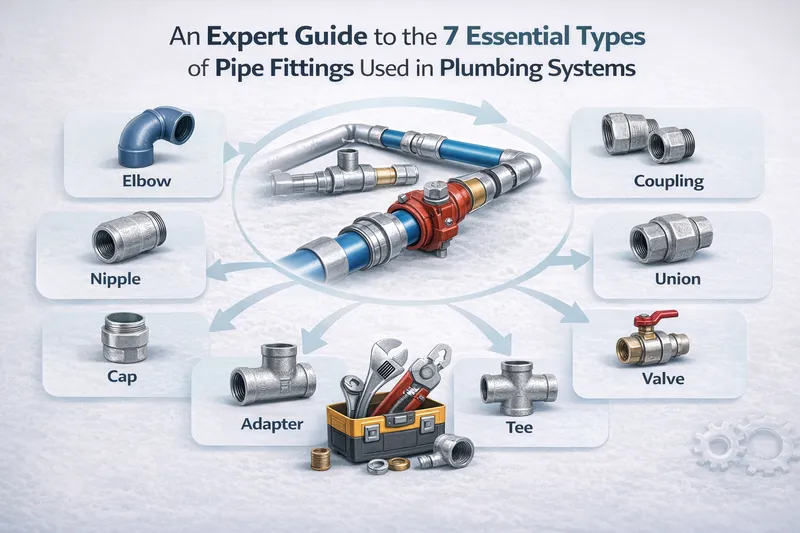
The vocabulary of pipe fittings is built around their function. Before we can appreciate the nuances of different materials, we must first grasp what these fundamental shapes are designed to accomplish. Imagine you are sketching a map for water to follow; these fittings are the symbols you use to direct its journey.
| Fitting Type | Primary Function | Common Application Example |
|---|---|---|
| Elbow | To change the direction of flow. | Routing a water line around a structural beam. |
| Tee | To create a branch from a main line. | Adding a supply line for a new dishwasher. |
| Coupling/Socket | To join two pipes of the same size in a straight line. | Extending a run of pipe across a long room. |
| Reducer | To connect a larger pipe to a smaller pipe. | Stepping down from a main water line to a faucet line. |
| Union | To create a semi-permanent, separable joint. | Installing a water heater so it can be easily replaced. |
| Cap | To seal the end of a pipe. | Terminating a line that is no longer in use. |
| Plug | To seal an opening in a fitting. | Closing an unused port on a tee or manifold. |
| Flange | To connect pipes, valves, and pumps in a high-strength, bolted connection. | Joining large-diameter pipes in industrial or commercial systems. |
Decoding the Language of Threads: NPT vs. BSPT
When we deal with threaded pipe fittings, particularly in metal systems like malleable iron or brass, we encounter a detail of profound significance: the thread standard. It is a technical point, yet one that can cause immense frustration if misunderstood. The two most dominant standards in the world are the American NPT and the British BSPT. To the untrained eye, they appear similar, but they are fundamentally incompatible, like two dialects with different grammatical rules. Attempting to mate them will almost certainly result in a leaky joint.
NPT, which stands for National Pipe Taper, is the U.S. standard. Its defining feature is that both the male and female threads are tapered. Imagine two cones nesting together. As the fitting is tightened, the flanks of the threads compress against each other, creating a seal through a combination of friction and deformation—a process known as wedging. This is why a thread sealant (like PTFE tape or pipe dope) is always required; it fills the microscopic gaps to make the joint watertight and gas-tight.
BSPT, or British Standard Pipe Taper, is common in Europe, Asia, and many other parts of the world. In this system, the male thread is tapered, but the female thread is often parallel. The sealing mechanism is different. The primary seal is formed not by the wedging of the thread flanks but by the crushing of the male thread into the parallel female thread, primarily at the root and crest. Like NPT, BSPT also requires a sealant to ensure a leak-proof connection.
Understanding this distinction is not just an academic exercise. For international projects or when sourcing parts from different regions, specifying the correct thread type—such as NPT threaded pipe fittings or BSPT threaded pipe fittings—is a non-negotiable requirement for system integrity.
NPT vs. BSPT at a Glance
A direct comparison highlights their critical differences, which are rooted in their design philosophy and geographic origins.
| Feature | NPT (National Pipe Taper) | BSPT (British Standard Pipe Taper) |
|---|---|---|
| Governing Standard | ASME B1.20.1 | ISO 7-1, BS EN 10226 |
| Geographic Prevalence | United States, Canada | Europe, Asia, Australia, UK |
| Thread Angle | 60 degrees | 55 degrees |
| Thread Profile | Flattened peaks and valleys (Sellers profile) | Rounded peaks and valleys (Whitworth profile) |
| Sealing Method | Wedging of tapered thread flanks | Compression of male taper against female thread |
| Compatibility | Not compatible with BSPT | Not compatible with NPT |
1. Malleable Cast Iron: The Enduring Workhorse
Among the various materials used for pipe fittings, malleable cast iron holds a place of particular distinction. It represents a triumph of metallurgy, a material engineered to possess both the strength of cast iron and a degree of ductility—the ability to deform without fracturing—that standard cast iron lacks. This unique combination makes it exceptionally well-suited for demanding applications where vibration, high pressure, and thermal stresses are common. For plumbing professionals, especially those working on gas, compressed air, steam, or fire protection systems, malleable iron fittings are a trusted and time-honored choice.
The Art and Science of Malleable Iron
The creation of malleable cast iron is a fascinating two-step process that feels almost alchemical. It begins with the casting of “white iron,” a hard, brittle material where the carbon is chemically bound as iron carbide. This initial casting has the desired shape—an elbow, a tee, a flange—but lacks the necessary toughness. The transformation occurs during a prolonged heat treatment process called annealing. The white iron castings are heated in a furnace for several days, a process that carefully controls the thermal cycle. This intense heat breaks down the brittle iron carbide, allowing the carbon to precipitate out as small, irregular nodules of graphite within a softer iron matrix.
The result is a material that retains high tensile strength but is now “malleable,” capable of withstanding the mechanical stresses of pipe installation and system operation. This process, developed over centuries, is what gives malleable cast iron parts their remarkable resilience (Jianzhi Pipe Fittings, 2022).
A Spectrum of Fittings: From Elbows to Flanges
The versatility of malleable iron allows for the production of a vast array of fitting types, catering to nearly any plumbing configuration. These fittings are typically threaded, designed to mate with steel or iron pipes. The most common forms include:
- Elbows: Available in 90° and 45° angles, including “street” elbows that have one male and one female end, reducing the need for an extra nipple.
- Tees and Crosses: Used to create one or more branch lines from a main run.
- Sockets and Couplings: For joining two pipes in a straight line. Reducing sockets connect pipes of different diameters.
- Unions: A three-part fitting that allows a pipe section to be disconnected without having to cut the pipe, invaluable for equipment maintenance.
- Plugs and Caps: To terminate a pipe run or seal an unused port in a fitting.
- Flanges: Flat, circular fittings that are bolted together to create a strong, high-pressure connection, often seen in industrial settings and for connecting to large equipment.
Black vs. Galvanized: A Tale of Two Finishes
Malleable iron fittings are commonly available in two primary finishes: black and galvanized. The choice between them is not aesthetic but functional.
Black pipe fittings are made from uncoated iron or steel. The dark, scaly finish is a result of the iron oxide formed during the manufacturing process. Because they lack a protective coating, black iron fittings are susceptible to rust when exposed to water. Consequently, their use is restricted to closed-loop systems or those carrying fluids that are not corrosive in the same way as water, such as natural gas, propane, and heating oil. You will find them constituting the backbone of most residential and commercial gas distribution networks.
Galvanized pipe fittings, on the other hand, are coated with a layer of zinc. This process, known as galvanization, provides robust protection against corrosion. The zinc acts as a sacrificial anode, corroding preferentially to the iron beneath it. This makes galvanized fittings suitable for potable water lines, compressed air lines, and outdoor applications where they may be exposed to the elements. For a long time, galvanized steel pipe and fittings were the standard for residential water supply before being largely superseded by copper and PEX. However, their strength keeps them relevant in many repair and industrial scenarios. A comprehensive selection of these components can be found in a detailed catalog of malleable iron pipe fittings.
Application in Modern Systems
Despite the advent of plastics and other modern materials, malleable cast iron fittings remain indispensable in many areas. Their high mechanical strength and pressure ratings make them a default choice for systems where failure is not an option. Fire protection systems, for instance, rely heavily on malleable or ductile iron fittings because they must maintain their integrity under the extreme heat and pressure of a fire (Jianzhi Pipe Fittings, 2023). Their durability also makes them a long-lasting solution for plumbing, drainage, and steam systems, with a service life that can exceed 50 years when installed correctly. Their robustness is why engineers and contractors continue to rely on established suppliers like Jianzhi Pipe Fittings, a manufacturer that has been producing these vital components since 1982.
2. Copper: The Classic Standard for Water Supply
For several decades, copper has been the benchmark material for residential and commercial water supply lines. Its prevalence is a testament to a unique combination of properties that make it nearly ideal for carrying potable water. When you see the rigid, metallic lines running to a sink or water heater, you are most likely looking at a system built with copper pipes and fittings. Its history in plumbing is long and storied, and while newer materials like PEX have gained popularity, copper remains a premium choice known for its reliability and longevity.
Characteristics and Properties of Copper
Copper’s suitability for plumbing stems from several key characteristics. First, it is highly resistant to corrosion from water, which ensures a long service life and helps maintain water quality. Second, copper is biostatic, meaning it naturally inhibits the growth of bacteria and other microorganisms on its surface. This is a significant public health benefit. Third, it is a durable material that can withstand high pressures and a wide range of temperatures, from cold supply lines to hot water recirculation systems. It is also impermeable, preventing any outside contaminants from leaching into the water supply. Finally, it is 100% recyclable, making it an environmentally sustainable choice.
Common Copper Fitting Shapes and Their Applications
Copper plumbing systems are typically assembled using fittings that are joined to the pipe through soldering, also known as “sweating.” This process involves heating the fitting and pipe with a torch and then applying solder, which is drawn into the joint by capillary action to form a permanent, leak-proof seal.
The common types of copper fittings mirror the functional shapes seen in other materials:
- Wrought Copper Elbows: Used to make precise 90° and 45° turns.
- Wrought Copper Tees: For creating branches in the supply line.
- Couplings: To join straight sections of pipe. Slip couplings are used for repairs, as they have no internal stop.
- Adapters: These are crucial transition fittings, often with a sweat connection on one end and a threaded connection (male or female) on the other, allowing the copper system to connect to fixtures, valves, or other pipe materials.
In addition to sweat fittings, there are also compression and press-connect systems. Compression fittings use a brass ferrule (a soft metal ring) that is compressed into the space between the pipe and the fitting body by a nut, creating a watertight seal without heat. Press-connect fittings use a mechanical press tool to crimp a fitting with a built-in O-ring onto the pipe, offering a fast, reliable connection without the need for a flame.
Best-Use Scenarios and Limitations
Copper’s primary application is for potable hot and cold water distribution systems. Its rigidity and neat appearance also make it a preferred choice for exposed plumbing runs where aesthetics are a consideration. However, it is not without its limitations. The material cost of copper is significantly higher than that of plastic alternatives. The installation process, particularly soldering, requires skill, training, and safety precautions due to the use of an open flame. In areas with very aggressive (highly acidic or alkaline) water chemistry, copper can be susceptible to pitting corrosion over time, although this is relatively rare.
3. PEX: The Flexible Modern Solution
In the landscape of modern plumbing, few materials have had as transformative an impact as PEX, or cross-linked polyethylene. Introduced in the latter half of the 20th century, PEX tubing offers a compelling alternative to traditional rigid pipe materials like copper and galvanized steel. Its defining characteristic is flexibility, a property that has fundamentally changed plumbing installation methods, making them faster, more efficient, and often more reliable. PEX represents a shift in thinking, moving away from a system of rigid segments and numerous joints to one of continuous, flexible lines.
Understanding PEX and Its Properties
PEX is a type of plastic tubing made from high-density polyethylene. The “cross-linking” process (denoted by the “X”) involves creating chemical bonds between the polyethylene polymer chains. This process dramatically improves the material’s properties, enhancing its strength, temperature resistance, and chemical durability compared to standard polyethylene. There are three main methods for producing PEX (PEX-a, PEX-b, and PEX-c), which result in slightly different characteristics, but all are suitable for potable water systems.
The key advantages of PEX are numerous. Its flexibility allows it to be bent around corners, reducing the need for elbow fittings and thereby minimizing potential leak points. It is highly resistant to scale buildup and corrosion, which can plague metal pipes in certain water conditions. PEX can also expand slightly, giving it a degree of freeze resistance that is superior to rigid pipes.
PEX Fitting Systems
Because PEX is flexible, it requires specialized fitting systems to ensure secure connections. There are several popular methods, each with its own tools and techniques:
- Crimp/Clamp System: This is one of the most common methods. A barbed fitting is inserted into the PEX tubing, and a copper crimp ring or a stainless steel clamp ring is positioned over the tubing and compressed onto the fitting with a dedicated tool.
- Expansion System (ProPEX): Used with PEX-a tubing, this method involves using an expansion tool to stretch the tubing and an expansion ring before inserting a larger-diameter fitting. As the tubing and ring shrink back to their original size, they create an exceptionally strong compressive seal around the fitting.
- Push-to-Connect System: These innovative fittings allow PEX tubing (as well as copper and CPVC) to be connected without any special tools. The tubing is simply pushed into the fitting, where a system of metal teeth and an O-ring grips and seals it. They are excellent for repairs and work in tight spaces.
- Compression Fittings: Similar to those used with copper, these can be used to connect PEX, especially when transitioning to a threaded fixture or valve.
Advantages in Modern Plumbing
The primary benefit of PEX is installation speed. A plumber can run a continuous line from a manifold directly to a fixture (a “home-run” system), eliminating all concealed fittings within walls and ceilings. This not only saves time but also significantly reduces the risk of hidden leaks. The material cost is generally lower than copper, and its resistance to chlorine and scale makes it a durable, low-maintenance choice.
However, PEX is not without its own considerations. It is not approved for outdoor use, as it is susceptible to degradation from UV radiation. It must be protected from sunlight during storage and installation. While some push-to-connect fittings are rated for underground use, most PEX connections are intended to be made in accessible locations.
4. PVC: The King of Drain, Waste, and Vent (DWV)
When we shift our focus from the pressurized supply lines that bring clean water into a building to the gravity-fed systems that carry wastewater away, we enter the domain of PVC. Polyvinyl Chloride is a rigid, typically white or off-white plastic pipe material that has become the undisputed standard for Drain, Waste, and Vent (DWV) applications in modern construction. Its combination of low cost, ease of installation, and chemical resistance makes it perfectly suited for this non-pressurized role.
The Nature of PVC and Its Characteristics
PVC is a thermoplastic polymer that is lightweight yet strong. Its smooth interior surface provides excellent flow characteristics, minimizing the chance of clogs and blockages. It is impervious to the chemicals commonly found in residential and commercial sewage, as well as the sewer gases that a venting system must handle. This chemical inertness ensures a very long service life in a DWV application.
The most significant limitation of standard PVC (Schedule 40) is its low temperature tolerance. It is not designed to handle hot water. Exposure to temperatures above approximately 140°F (60°C) can cause the pipe to soften, deform, and potentially fail. This is why its use is strictly limited to the drainage side of the plumbing system, downstream from fixture P-traps where the water has had a chance to cool.
PVC Fittings and Solvent Welding
PVC plumbing systems are assembled using a process called solvent welding. It is often mistakenly called “gluing,” but the process is quite different. It involves a primer, which cleans and softens the surface of the pipe and fitting, followed by a solvent cement. The cement chemically melts the two surfaces, and when they are pushed together, the plastic molecules from the pipe and the fitting intermingle. As the solvent evaporates, the two pieces become a single, continuous piece of plastic—a seamless, permanent, and leak-proof joint.
The types of pipe fittings used in plumbing systems for DWV applications are specialized for gravity flow and include:
- Wyes and Combo Wyes: Fittings that create a branch at a 45° angle to promote smooth flow and prevent solids from creating a blockage.
- Sanitary Tees: Used to connect a horizontal drain to a vertical stack. Their internal sweep directs flow downwards.
- Long-Sweep Elbows: These have a more gradual bend than a standard elbow, which helps waste flow more smoothly and makes it easier to run a drain snake through the line.
- P-Traps: The U-shaped fitting found under every sink, a clever device that holds a plug of water to block sewer gases from entering the living space.
- Couplings and Cleanouts: For joining pipes and providing access points for clearing clogs.
Where PVC Fits In (and Where It Doesn’t)
PVC is the ideal choice for all aspects of a DWV system—underground sewer lines, above-ground drainage stacks, and the vent pipes that extend through the roof to equalize pressure in the system. Its affordability, light weight, and the speed of solvent-weld installation make it a favorite of plumbing contractors.
However, its temperature limitation means it must never be used for water supply lines, especially not for hot water. For pressurized applications, other materials are required.
5. CPVC: The Hot Water Specialist
The limitations of PVC, particularly its inability to handle hot water, led to the development of its close relative: CPVC, or Chlorinated Polyvinyl Chloride. CPVC begins as PVC polymer but undergoes a secondary chlorination process. This seemingly small chemical modification has a profound effect on the material’s physical properties, most notably its ability to withstand higher temperatures. This makes CPVC a viable and cost-effective material for hot and cold potable water distribution systems.
PVC’s Heat-Resistant Cousin
The extra chlorine atoms in the CPVC polymer chain increase the material’s glass transition temperature. In practical terms, this means it can safely handle water at temperatures up to around 200°F (93°C), making it suitable for residential and commercial hot water lines. It is easily distinguishable from PVC; while PVC is typically white, CPVC is usually a light tan or cream color. This color-coding is a critical safety feature to prevent accidental misuse of PVC in a hot water application.
Like PVC, CPVC is resistant to corrosion and scale buildup. It does not rust or pit, making it a durable choice in areas with aggressive water. It also shares PVC’s smooth interior for excellent flow.
CPVC Fittings and Installation
The installation process for CPVC is virtually identical to that of PVC: it uses solvent welding to create permanent joints. However, it is absolutely vital to use the correct solvent cement. CPVC requires a specific cement formulated for its chemical makeup; using standard PVC cement on CPVC pipes will result in a weak joint that is likely to fail under pressure, especially when hot water is introduced. The primers and cements are typically color-coded (e.g., orange or yellow for CPVC) to help prevent this error.
The range of CPVC fittings mirrors those used for other pressurized supply systems:
- Elbows, Tees, and Couplings: For directing flow and joining pipes.
- Adapters: Transition fittings with solvent-weld sockets on one end and threaded (male or female) connections on the other, for connecting to water heaters, fixtures, and valves.
- Unions and Ball Valves: To allow for system maintenance and provide shut-off capabilities.
Applications for CPVC
CPVC’s primary role is as a material for hot and cold water supply lines. It offers a lower-cost alternative to copper and is often perceived as easier to install by those who are not proficient in soldering. It competes directly with PEX in the residential market. The choice between CPVC and PEX often comes down to local code, contractor preference, and specific project requirements. CPVC’s rigidity can be an advantage in some situations, while PEX’s flexibility is superior in others.
One consideration with CPVC is that it can become more brittle over time, especially when exposed to UV light or if it is part of a system that experiences significant water hammer (hydraulic shock). Proper support and installation are key to its long-term performance.
6. Brass: The Versatile and Durable Connector
Brass is an alloy, a metal composed primarily of copper and zinc. The combination of these two elements results in a material that is harder, stronger, and more corrosion-resistant than pure copper. In the world of plumbing, brass is a highly valued material, not typically used for long runs of pipe but rather for critical fittings, valves, and components where strength, durability, and precise threads are essential. It often serves as the indispensable intermediary, connecting different parts of a system together.
Composition and Qualities of Brass
The properties of brass can be tailored by varying the proportions of copper and zinc. For plumbing fittings, the alloy is chosen to provide excellent machinability, allowing for the creation of clean, sharp threads. It has very good corrosion resistance, particularly against water, making it ideal for potable water systems. Certain brass alloys, known as dezincification-resistant (DZR) brass, are specifically formulated for use in areas with water chemistry that could otherwise leach zinc from the alloy.
Brass is stronger than copper and plastic, making it a reliable choice for fittings that will be under constant stress or that need to be repeatedly tightened and loosened. Its gold-like appearance also lends a look of quality to exposed plumbing components.
Types of Brass Fittings
Brass is the material of choice for many types of transitional and specialty fittings. Its versatility is one of its greatest assets.
- Threaded Fittings: Brass is commonly used to make threaded nipples, adapters, couplings, and plugs. Its strength ensures the threads will not easily strip or deform. You will often find brass adapters used to connect PEX or copper lines to a threaded steel pipe or a faucet inlet.
- Compression Fittings: Many compression nuts and ferrules are made of brass. The relative softness of the brass ferrule allows it to deform and create a tight seal against a copper or plastic pipe without damaging it.
- Flared Fittings: Used extensively for gas lines and in automotive applications, flared fittings create a metal-to-metal seal. A special flaring tool is used to create a 45° flare on the end of a copper tube, which is then pressed against the conical seat of the brass fitting by a flare nut.
- Valves: The vast majority of plumbing valves, from simple shut-off stops under a sink to large ball valves on a main line, have bodies made of cast or forged brass.
Common Uses for Brass Fittings
Think of brass as the problem-solver of the plumbing world. It is used wherever strength and reliable sealing are paramount. It is the go-to material for connecting water heaters, where both temperature and threaded connections are present. It is used for gas connections behind stoves and furnaces, where the integrity of the seal is a major safety concern. It is also found in well pump installations, water meters, and pressure-reducing valves. Essentially, wherever a plumbing system needs a robust, threaded connection or a durable, movable part, you are likely to find brass.
7. Stainless Steel: The Premium Choice for Purity and Strength
At the highest end of the spectrum of pipe fitting materials is stainless steel. It is an alloy of iron, chromium, and often nickel, renowned for its exceptional corrosion resistance, high strength, and hygienic properties. While its cost precludes it from being used for general residential plumbing, it is the material of choice for applications where purity, durability, and resistance to chemical attack are non-negotiable. It represents the pinnacle of performance in plumbing systems.
The Merits of Stainless Steel
The magic of stainless steel lies in its chromium content. The chromium reacts with oxygen in the air to form a thin, invisible, and incredibly durable passive layer of chromium oxide on the surface of the steel. This layer is self-healing; if it is scratched or damaged, it instantly reforms, providing continuous protection against rust and corrosion. This makes it ideal for use in highly corrosive environments, such as coastal areas with salt-laden air or industrial plants with chemical exposure.
In addition to its corrosion resistance, stainless steel is extremely strong and can handle very high pressures and temperatures. Its smooth, non-porous surface is also easy to clean and sanitize, which is why it is mandated for use in food processing, beverage, and pharmaceutical industries where product purity is of the utmost concern.
Stainless Steel Fitting Types
Stainless steel fittings are available in a variety of grades (like 304 and 316, with 316 offering superior corrosion resistance) and connection types to suit different applications.
- Threaded Fittings: Like malleable iron, stainless steel threaded fittings are common, providing high-strength connections for smaller-diameter pipes. They are often used in process piping and for connecting gauges and instrumentation.
- Butt-Weld Fittings: In high-pressure or high-purity systems, fittings are often welded directly to the pipe. This creates a smooth, continuous system with no threads or crevices where contaminants could accumulate.
- Press-Fit Systems: Similar to copper press systems, stainless steel press-fit systems have become popular in commercial and industrial plumbing. They offer a fast, reliable, and flame-free method for joining stainless steel pipes, significantly reducing installation time compared to welding.
High-End Applications
The use of stainless steel is dictated by necessity and budget. You will find it in commercial kitchens, breweries, dairies, and pharmaceutical manufacturing plants. It is used in marine environments on ships and oil rigs where resistance to saltwater is vital. It is also increasingly used in architectural applications, where exposed plumbing is part of the design aesthetic and the clean, modern look of stainless steel is desired. For a homeowner, using stainless steel might be limited to a flexible braided connector hose for a faucet or toilet, which uses stainless steel braiding for burst protection, but a full system of stainless pipes and fittings is rare in a residential setting due to its prohibitive cost.
Installation Best Practices: Ensuring a Leak-Free Future
Selecting the correct types of pipe fittings used in plumbing systems is only half the battle. The most well-designed system with the highest quality components can fail if the installation practices are subpar. A successful, leak-free plumbing system is a testament to craftsmanship and attention to detail. This involves a deep respect for the materials and a methodical approach to every joint and connection.
The Importance of Proper Thread Sealing
For any threaded pipe system, such as one using malleable iron, brass, or stainless steel, the seal is not made by the threads alone. The microscopic gaps that exist even in perfectly cut threads must be filled to create a watertight and gas-tight joint. This is the job of a thread sealant.
There are two primary types:
- PTFE Tape (Teflon Tape): This is a thin ribbon of polytetrafluoroethylene film. It is wrapped around the male threads (typically 3-4 times in the direction of tightening) before the fitting is assembled. The tape acts as both a lubricant, allowing the joint to be tightened smoothly, and as a sealant, filling the voids in the threads.
- Pipe Dope (Pipe Joint Compound): This is a paste-like sealant that is brushed onto the male threads. It also lubricates and seals the joint. Modern pipe dopes are sophisticated compounds that are formulated to be compatible with different fluids (water, gas, oil) and materials (plastics, metals).
The key is to use the right sealant for the application and to apply it correctly—only on the male threads, to avoid getting excess sealant inside the pipe where it could cause a blockage.
Tightening with Precision
There is a fine line between a joint that is too loose and one that is too tight. An under-tightened joint will leak. An over-tightened joint can be just as problematic. Overtightening can stress the fitting, leading to cracks—either immediately or later due to operational pressures and temperatures. It can also damage the threads, making disassembly difficult and potentially ruining the pipe or fitting. The old adage “hand-tight plus a quarter turn with a wrench” is a decent starting point, but experience is the best guide. The goal is to feel the joint become firm and secure without applying excessive force. For critical applications, engineers may specify a torque value, which requires the use of a torque wrench for assembly.
System Testing and Inspection
No plumbing installation should be considered complete until it has been thoroughly tested. Once the system is assembled, but before walls are closed up and fixtures are permanently set, the system must be pressurized to check for leaks. For water supply lines, this involves capping all the outlets, filling the system with water, and using a test pump to raise the pressure to a level specified by local plumbing codes (often well above normal operating pressure). The system is then left under pressure for a set period while every single joint is meticulously inspected for even the smallest drip. For DWV systems, a similar test is performed by plugging the main drain and filling the entire system with water up to the roof level. This final, rigorous inspection is the ultimate confirmation of a job well done.
Frequently Asked Questions (FAQ)
1. What is the difference between a standard pipe elbow and a street elbow? A standard elbow has two female (hub or threaded) connections, requiring a short piece of pipe or a nipple to connect it to another fitting. A street elbow has one female connection and one male (spigot or threaded) connection. This allows it to connect directly to another fitting, saving space and eliminating the need for one joint.
2. Can I mix different types of pipe fittings in my plumbing system? Yes, but it must be done correctly using appropriate transition fittings. For example, you can connect a copper pipe to a PEX pipe using a specific adapter that has a sweat connection on one end and a PEX barb on the other. You cannot simply solder a copper pipe to a galvanized fitting. Mixing metals improperly can lead to galvanic corrosion, where one metal corrodes rapidly.
3. Are black iron pipe fittings suitable for drinking water? No, black iron (or black steel) pipe and fittings should never be used for potable (drinking) water. They are uncoated and will rust quickly when exposed to water, contaminating the water with iron oxide and leading to restricted flow and leaks. Their use is reserved for gas, oil, and non-potable closed-loop heating systems.
4. What does the “schedule” of a pipe fitting mean? The schedule number (e.g., Schedule 40, Schedule 80) refers to the wall thickness of a pipe or fitting. A higher schedule number indicates a thicker wall. For a given nominal pipe size, a Schedule 80 fitting will have a thicker wall and thus a higher pressure rating than a Schedule 40 fitting. This is most commonly referenced with PVC and steel pipes.
5. How do I choose between NPT and BSPT threaded pipe fittings? The choice is determined primarily by your geographic location and the standard used by the equipment or existing piping you are connecting to. In the United States and Canada, NPT is the standard. In Europe, Asia, and most other parts of the world, BSP (including BSPT) is the standard. They are not interchangeable, so you must identify which thread type you are working with to ensure you purchase compatible fittings.
6. What are the most durable types of pipe fittings used in plumbing systems? Durability depends on the application, but for sheer mechanical strength and resistance to pressure and temperature, malleable cast iron and stainless steel fittings are among the most robust. For corrosion resistance in typical potable water systems, copper and high-quality PEX systems have proven to be extremely durable, often lasting for 50 years or more.
7. Why are malleable cast iron fittings used in fire sprinkler systems? Malleable cast iron fittings are used in fire sprinkler systems because of their high strength, durability, and ability to withstand high pressures and temperatures. In the event of a fire, the plumbing system must remain intact to deliver water. Malleable iron will not melt or fail at the temperatures typically encountered in a building fire, ensuring the sprinkler system can perform its life-saving function (Jianzhi Pipe Fittings, 2023).
Conclusion
The exploration of the types of pipe fittings used in plumbing systems reveals a world of intricate design and material science. It is a domain where small choices have significant consequences for the safety, efficiency, and longevity of a building’s most vital infrastructure. We have seen how the robust, threaded nature of malleable cast iron makes it a stalwart for gas and steam, while the biostatic and reliable nature of copper has made it a long-standing choice for water. We have also appreciated the revolution brought by the flexibility of PEX and the cost-effective utility of PVC and CPVC in their respective roles.
A true understanding of plumbing requires moving beyond a simple identification of parts. It demands an empathetic grasp of the function of each component—why an elbow is shaped the way it is, why a union is necessary, why one thread standard cannot mate with another. The selection of a fitting is never arbitrary; it is a deliberate decision based on the fluid being carried, the pressure it is under, the temperature it will endure, and the material of the pipe it must join. By arming ourselves with this knowledge, we are empowered to build, repair, and maintain plumbing systems that are not just functional, but are truly resilient, reliable, and built to last.
References
Hebei Jianzhi Casting Group. (2020, September 26). Malleable iron pipe fittings. JZ Fitting.
Jianzhi Pipe Fittings. (2022, September 13). What are malleable cast iron threaded pipe fittings?https://www.jianzhipipefitting.com/2022/09/13/what-are-malleable-cast-iron-threaded-pipe-fittings/
Jianzhi Pipe Fittings. (2023, April 10). Malleable cast iron fittings: A durable and reliable choice for fire fighting systems. https://www.jianzhipipefitting.com/2023/04/10/malleable-cast-iron-fittings-a-durable-and-reliable-choice-for-fire-fighting-systems/
Jianzhi Pipe Fittings. (2023, June 8). Using malleable cast iron pipe fittings for plumbing. https://www.jianzhipipefitting.com/2023/06/08/using-malleable-cast-iron-pipe-fittings-for-plumbing/
Plastics Pipe Institute. (2020). PEX design guide: Residential water systems.
Schwartz, M. (2002). Encyclopedia of materials, parts, and finishes (2nd ed.). CRC Press.
International Organization for Standardization. (2021). Pipe threads where pressure-tight joints are made on the threads — Part 1: Designation, dimensions and tolerances (ISO 7-1:2021).
American Society of Mechanical Engineers. (2019). Pipe threads, general purpose (inch) (ASME B1.20.1-2019).